
Research Interests:
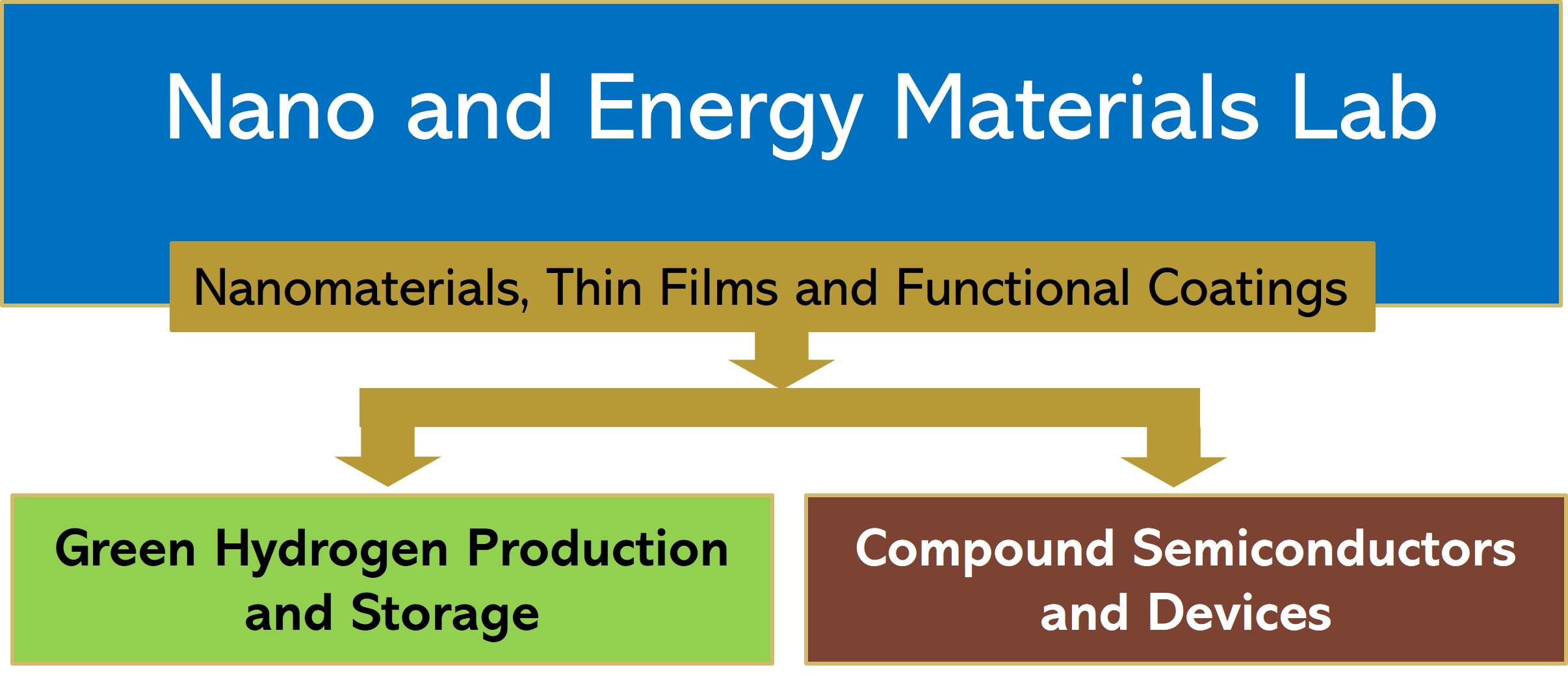
Nanomaterials, Thin Films and Functional Coatings:
Metal oxides/nitrides/sulfides, metals/alloys, nanocomposites, 2D materials (graphene/M-xene), and compound semiconductors
Hydrothermal and solvothermal synthesis, electrodeposition, chemical vapor deposition (CVD), and vacuum/electron-beam (E-beam) deposition
Compound Semiconductors and Electronic Devices:
Wide-bandgap compound semiconductors (Ga₂O₃ and SiC) thin films and heterostructures
Defects, doping, interface engineering and surface modification
Optoelectronic devices, memristors, chemical and gas sensors, power electronics
Electrocatalysis for Green Hydrogen Production and Energy Conversion:
Electrochemical (EC) and photoelectrochemical (PEC) water splitting for hydrogen production
Coupled electrolysis for integrated green hydrogen production and value-added Chemical production, urea Eeectrooxidation, biomass-derived molecule electrooxidation
Development of alkaline water electrolyzers and electrochemical reactors for sustainable fuel and chemical production
Interfacial electrochemistry, corrosion analysis and protection, electrochemical sensing, electrochemical 3D metal printing
Hydrogen Storage Materials and Technologies:
Metal hydrides, complex hydrides, nanostructured alloys, and high entropy alloys as hydrogen storage materials
Hydrogen-induced degradation in metals/alloys, hydrogen embrittlement
1. Nanomaterials, Thin Films and Coatings:
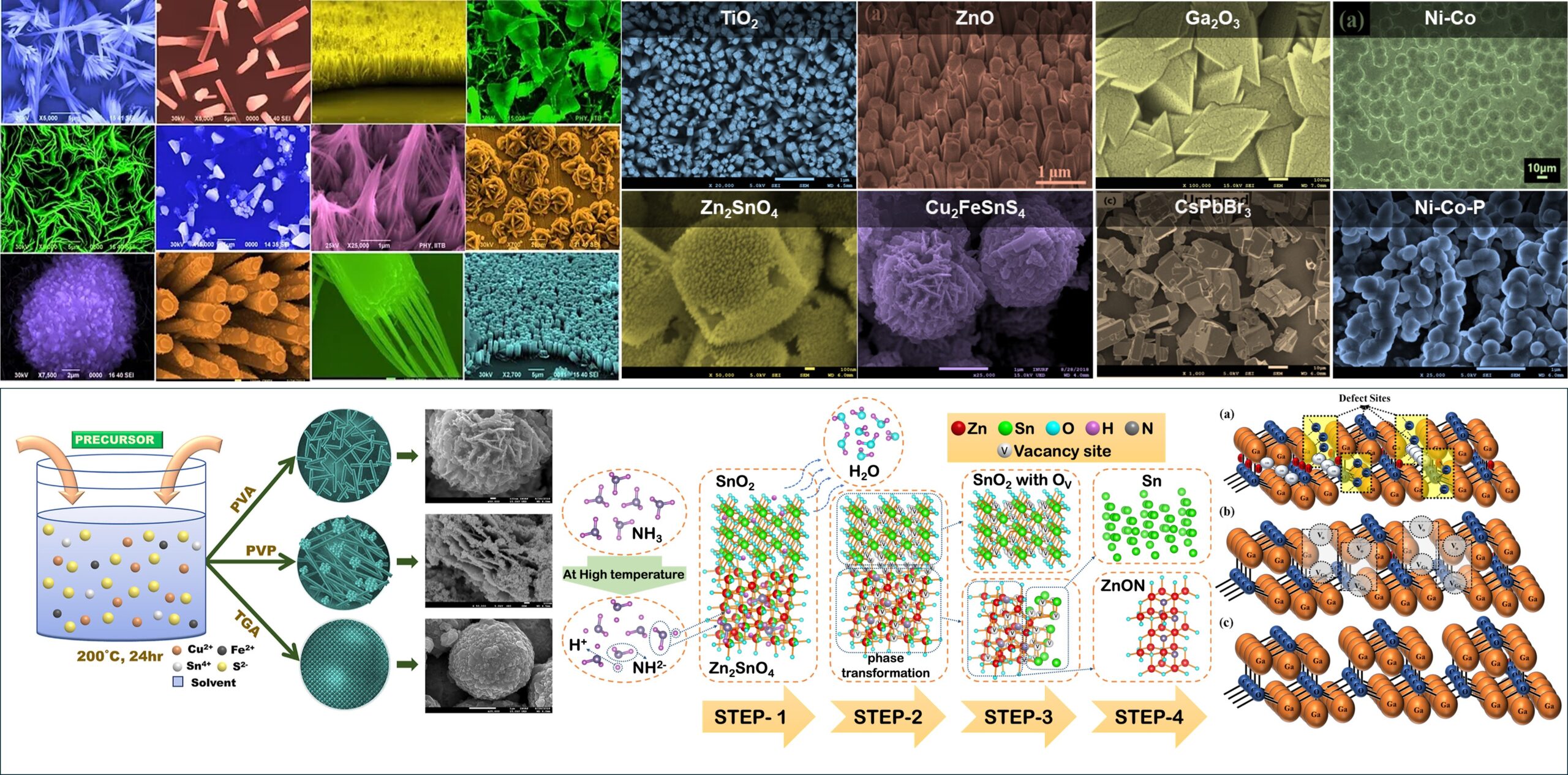
Properties of a material can be extensively tailored by designing various nanoscale materials and accordingly, the domain of application can be enlarged. The group is keen on the growth of various nanostructures of different (metal oxides, metals, chalcogenides) materials. Synthesis of graphene and graphene, like other 2-D materials using top-down as well as bottom-up approaches and their surface modification is one of our interests. The physics of quantum confinement and surface properties are always at the center of interest. However, the role of defects on electronics & optoelectronics properties and control over these defects by surface modification are one of the major interests of the group.
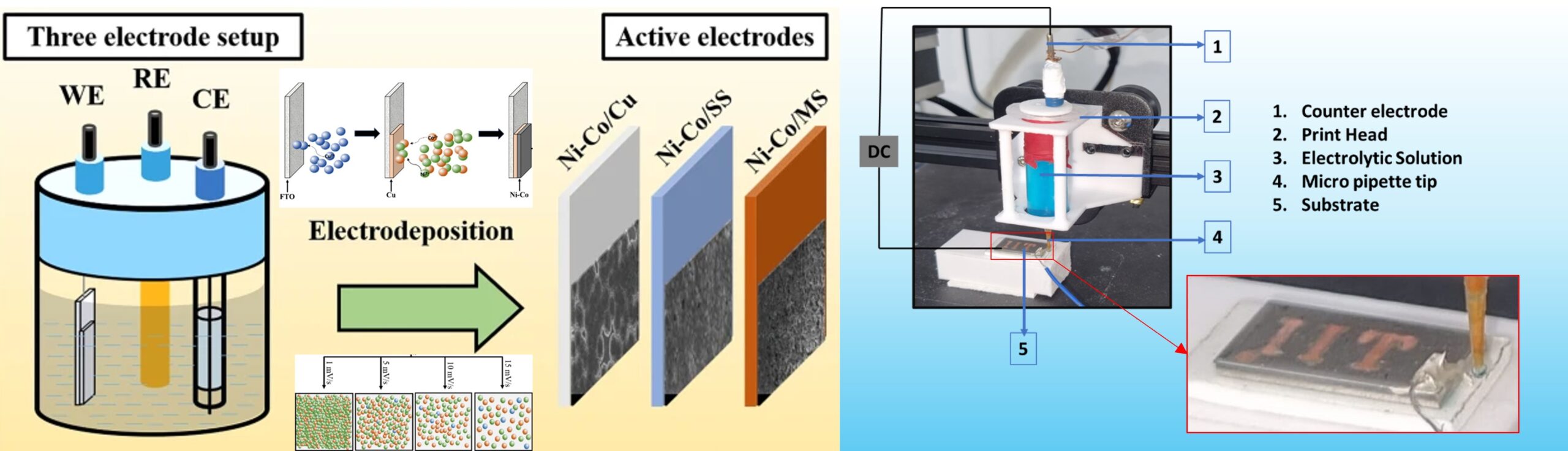
Electrodeposition and Electrochemical 3D Printing: Electrodeposition is a versatile and cost-effective method enabling precise control over material composition, thickness, and morphology at the nanoscale. It involves the migration of ions from electrolyte solutions, followed by reduction and deposition as solid material, crucial for metallization, surface engineering, and functional material synthesis. Our research group employs electrodeposition to deposit metal alloys for electrode manufacturing. In electrochemical 3D printing complex metal patterns are created on conductive substrates, reducing costs and environmental impact. Electrodeposition and electrochemical 3D printing are transformative technologies which facilitate the production of microscale electronic circuits, sensors, connectors and vital for miniaturized devices.
2. Compound Semiconductors and Devices:
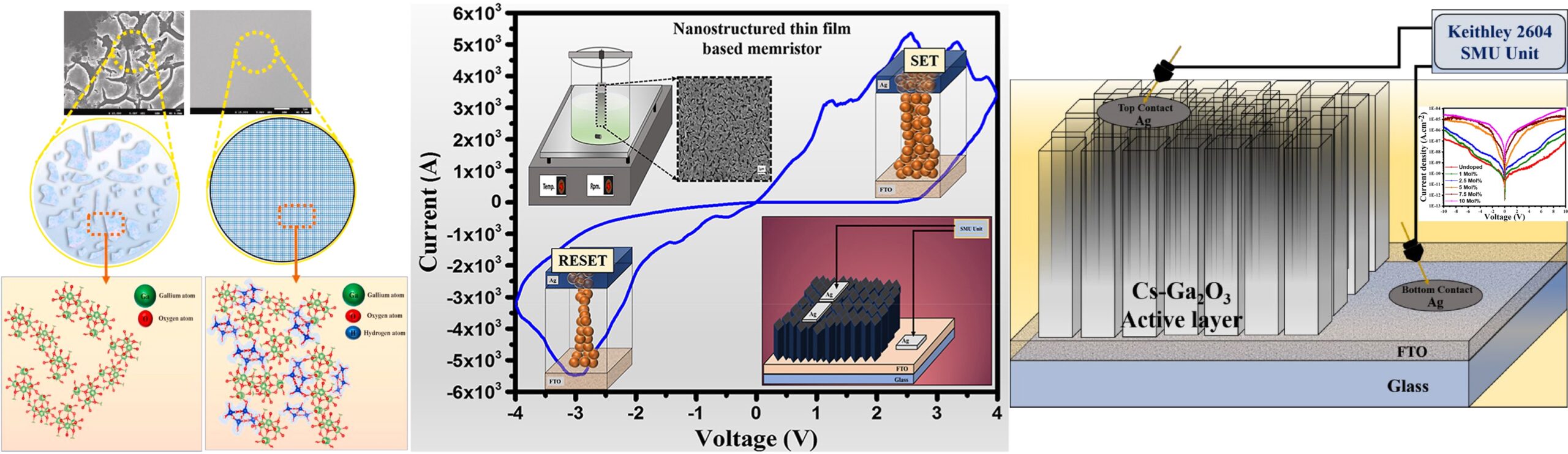
High-quality thin films of semiconductors are the backbone of electronic devices. The physical vapor deposition techniques are the most accepted tools to develop various semiconducting films for electronic applications. However, an alternative approach with economical processing is always in demand. Considering this, our group is working toward the development of various protocols to deposit high-quality thin films of Ga2O3 using wet-chemical techniques. We are also interested on GaN and SiC thin films. The development of heterostructures, doping and defect engineering are ongoing efforts. We adopt chemical vapor deposition, electrodeposition, chemical bath deposition and hydrothermal, etc. The improvement in the quality of the thin film and their properties are the major targets to make these thin films useful in several electronic applications such as Memristors, Photodetectors and Power Electronic Devices etc.
3. Electrocatalysis for Green Hydrogen Production and Energy Conversion:
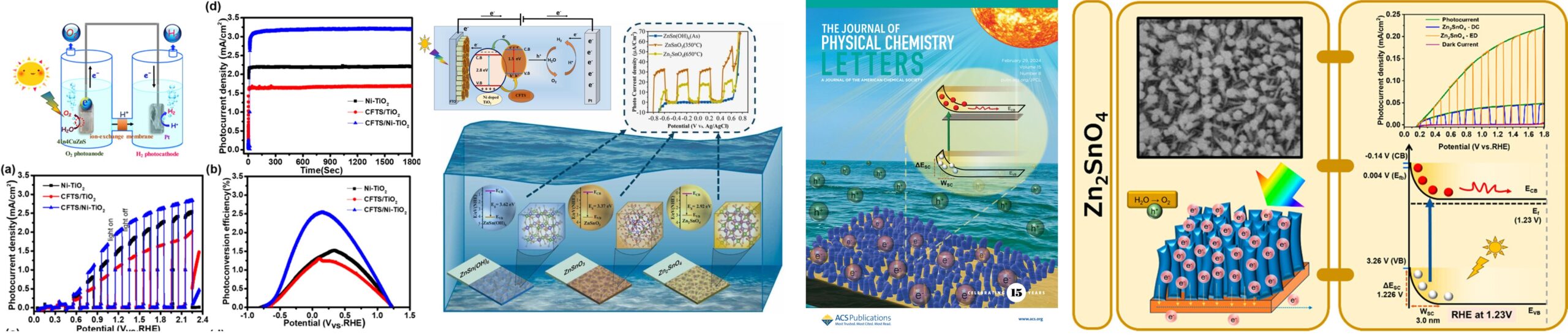
Focus lies on electrode development. Electrodes are the heart of electrolyzers, pivotal for efficient water splitting in both photoelectrochemical (PEC) and electrochemical processes. Advancements in electrode materials and designs are essential to enhance efficiency, durability, and cost-effectiveness. By addressing electrode-related challenges such as catalytic activity, stability, and mass transport limitations, breakthroughs can be achieved in electrolyzer technologies.
Solar Driven Hydrogen Production OR Photoelectrochemical (PEC) water splitting: Here electrodes function as photocatalysts, essential for driving the crucial water electrolysis process. We have endeavored to develop various materials such as ZnO, TiO2, Zn2SnO4, and CZTS specifically for PEC water splitting. Research predominantly aim to advance electrode materials, seeking to optimize efficiency, stability, and scalability. This involves exploration of catalysts, surface modifications, and nanostructures/ heterostructure design to enhance charge transfer kinetics and minimize energy losses.
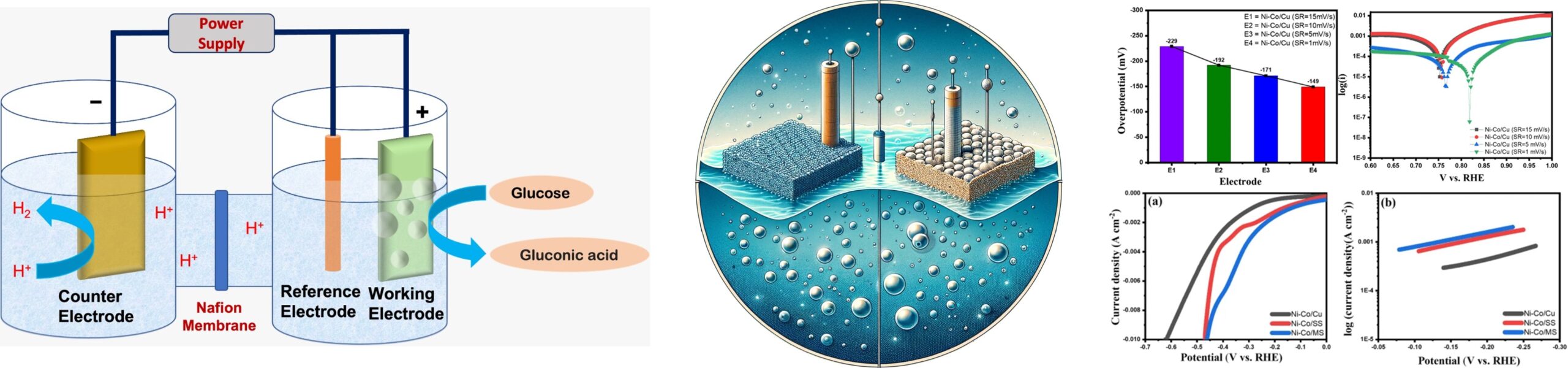
Electrocatalytic Hydrogen Production: Electrocatalytic hydrogen production through electrolysis offers a promising path for sustainable energy generation. This process involves splitting water into hydrogen and oxygen using an electric current, typically facilitated by an electrolyzer. However, recent advancements have also shown the potential for producing hydrogen from glucose electrolysis, offering a renewable and carbon-neutral alternative. Our research group is particularly focused on enhancing the efficiency and performance of electrolyzers by utilizing various alloy catalysts. We are exploring the utilization of alloys such as Ni-Co, Ni-Co-Fe, and Ni-Fe, which are coated onto substrates, to serve as efficient electrocatalysts for hydrogen production. These alloy catalysts offer advantages such as high catalytic activity, durability, and resistance to corrosion, making them promising candidates for use in electrolyzers. we aim to optimize their performance and develop cost-effective electrolysis systems for large-scale hydrogen production. Through our research efforts, we endeavor to contribute to the development of cost-effective and sustainable electrocatalytic systems for clean energy production
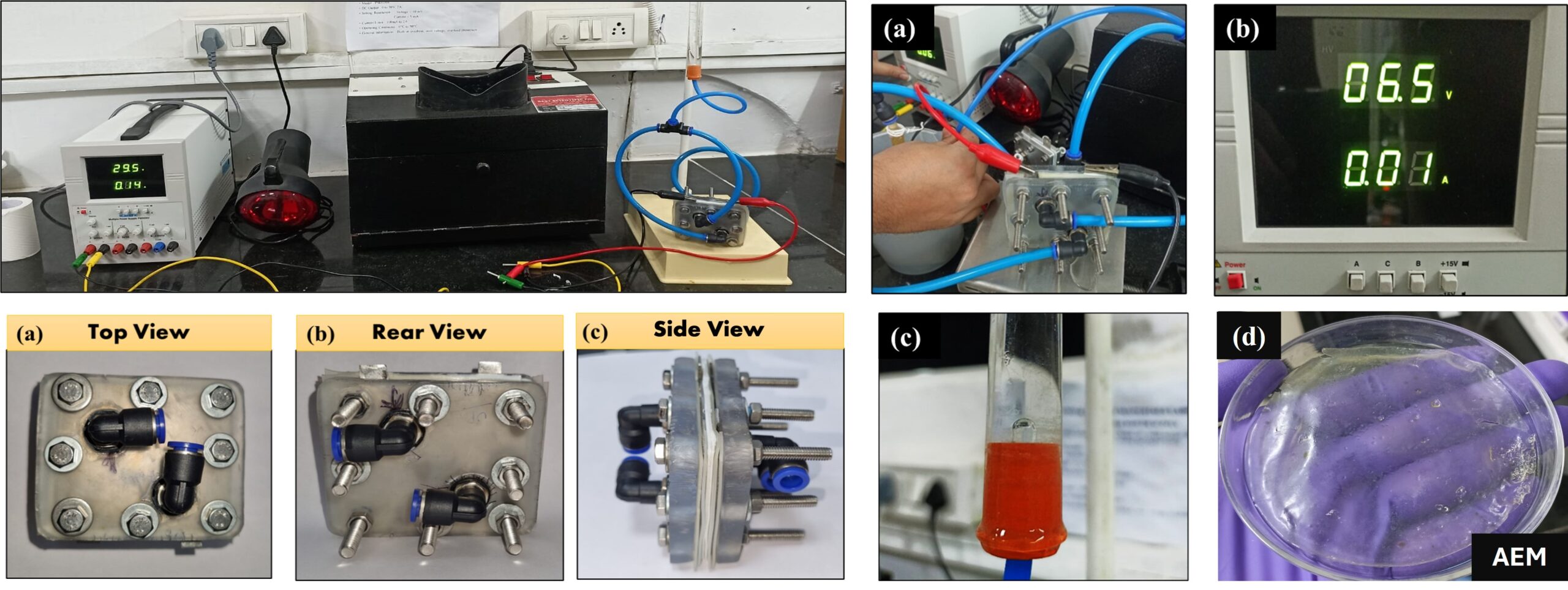
Alkaline Water Electrolyzer: Our research focuses on developing Alkaline electrolyzers for green hydrogen production. We aim to optimize the electrolyzer design and test its efficiency in terms of hydrogen evolution rate and other key properties. Through prototyping and rigorous testing, we endeavor to contribute to the advancement of sustainable hydrogen production technologies, crucial for transitioning towards a greener energy future.
4. Hydrogen Storage Materials and Technologies:
Our research focuses on Materials-based Hydrogen Storage, Metal hydrides, complex hydrides, nanostructured alloys, and high entropy alloys as hydrogen storage materials. Hydrogen-induced degradation in metals/alloys, hydrogen embrittlement. We aim to explore innovative materials and technologies to enhance hydrogen storage capacity, efficiency, and stability.